How emergency dentistry works
Emergency dentistry in Deepcar: how urgent dental care actually works
Good emergency dentistry is not a painkiller and a prescription. It is finding the cause, taking the pain away, making the tooth safe and planning whatever is left to do.
 Clinically reviewed by Dr Ibraheem Ijaz, Principal Dentist · GDC 301711 · Last reviewed April 2026
Four jobs in one appointment
Every emergency appointment at Deepcar Dental Care has the same four aims, in the same order. First, find the cause. Second, relieve the pain. Third, make the tooth, or the socket, or the gum, safe enough that it will not get worse overnight. Fourth, agree a plan for whatever remains. The £30 emergency examination with X-rays covers the first job and sets up the other three.
The order is not accidental. Pain relief that skips the diagnosis is guesswork, and guesswork in a mouth tends to come back a week later with a swelling. Making a tooth safe without a plan leaves you with a temporary dressing that quietly falls out in a month. Doing all four in one sitting is why around eight in ten of our emergency patients leave treated, not just examined.
Why the cause matters more than the painkiller
Toothache is a symptom, not a diagnosis. The same dull ache can come from an inflamed nerve, an abscess at the root tip, a pocket of infection in the gum, a crack you cannot see, or a wisdom tooth pushing on the one in front. Each has a different fix, and some fixes are wrong for the others. Drilling into a tooth that is only cracked does nothing for the crack; extracting a tooth with a gum abscess removes a tooth that could have been kept.
The nerve inside a tooth sits in a space about the width of a hair. When it becomes inflamed there is nowhere for the swelling to go, which is why pulp pain is so out of proportion to the size of the problem, and why painkillers only take the edge off. The pressure has to be released at the source. Our symptoms guides explain how we read the pattern of pain, and the conditions guides what is going on underneath it.
Why antibiotics alone are not a fix
This is the question we are asked most, so here is the honest answer. Antibiotics travel in the bloodstream. A dead tooth has no blood supply, so the drug cannot reach the bacteria living in the root canal, and it cannot drain the pus sitting in bone. UK guidance from SDCEP and the FGDP is clear: antibiotics are not a treatment for toothache, and they are only appropriate when infection is spreading into the face or neck, or you have a temperature and feel unwell with it.
What works is removing the source: draining the abscess through the tooth or the gum, cleaning out the root canal, or taking the tooth out. When antibiotics are appropriate, we prescribe them alongside that, not instead of it. Our guides to antibiotics for dental infection and incision and drainage go into the detail.
A course of tablets with no drainage typically buys a week or two of quiet, then the swelling comes back, often bigger. If you have been given antibiotics elsewhere and told to see a dentist ‘when it settles’, the settling is not the cure.
Symptoms, conditions and treatments: three doors into the same room
Our emergency guides are arranged the way a dentist thinks. Symptoms are what you notice: toothache, swelling, a broken tooth, pain on biting, a loose tooth, bleeding. Conditions are the diagnoses behind them: pulpitis, abscess, pericoronitis, cracked tooth, root fracture, trauma. Treatments are what we do about them: temporary fillings, pulpectomy, root canal, drainage, extraction, splinting, reimplantation.
Start wherever you are. If you know you have a lost filling, go straight to the lost filling guide. If you only know that a tooth hurts when you chew, start with pain when biting, which points you to cracked tooth and then to the treatments that fix it. Each page links across to its neighbours.
Staged care: what is done today and what can wait
Not everything has to be finished on the first visit, and some things should not be. The emergency stage is about pain and safety; the definitive stage is about how long the result lasts. A typical example is irreversible pulpitis in a back tooth. Today: numb the tooth, open it, remove the inflamed nerve, dress it and seal it. That is a pulpectomy, and it takes the pain away within hours. Later: shape and fill the canals under the microscope, then crown the tooth. Trying to do all of it in one emergency slot at 7pm is how root canals end up done badly.
The same logic applies to an emergency temporary filling that protects a broken tooth until a proper filling or crown can be made, a temporary crown while the lab makes the final one, or a splint on a loosened tooth that gives it two to four weeks to tighten before we decide whether it needs anything more. You always know which stage you are in and what the next one costs.
Where a tooth cannot be saved, or you would rather not go through root canal treatment, an emergency extraction is usually possible the same day. The choice is yours; we set out both routes with prices and leave you to decide.
Looking inside the tooth without guessing
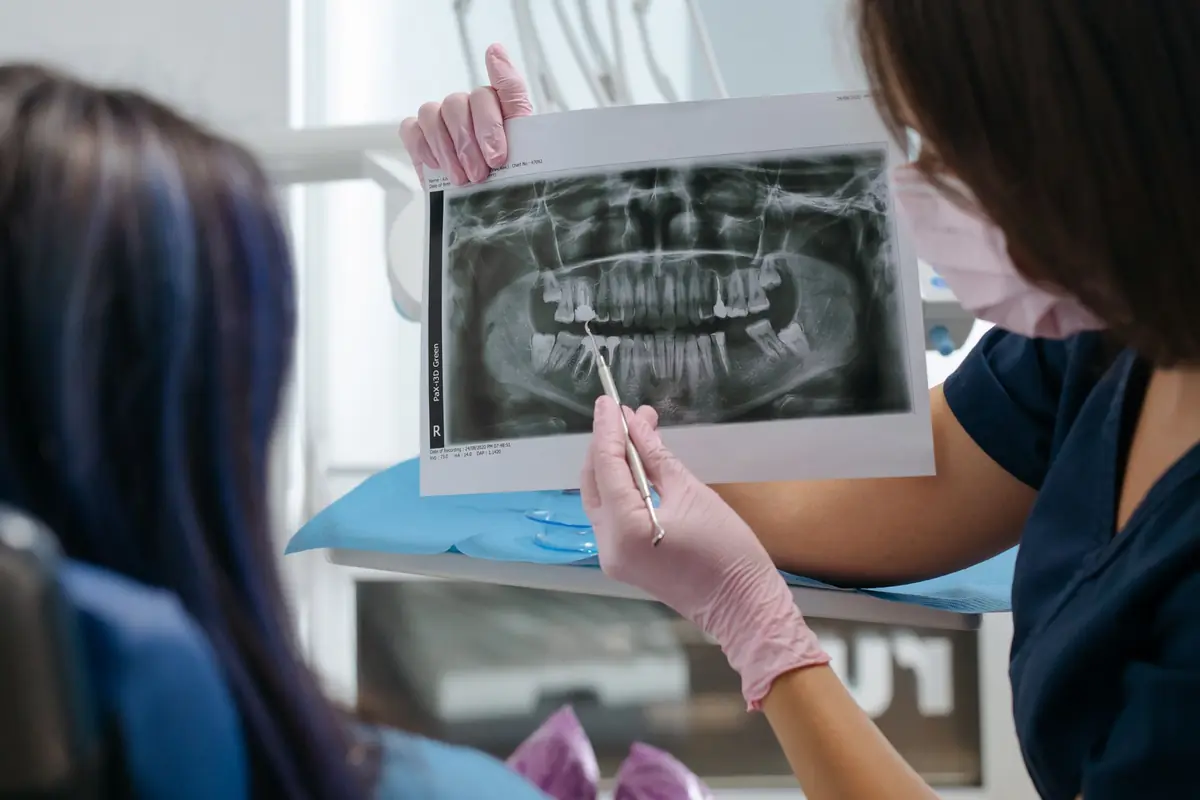
Same-day answers depend on being able to see. Every surgery has digital X-rays, which show an abscess at the root tip or decay under a filling within seconds. For anything three-dimensional, a crack running down a root, a wisdom tooth wrapped around a nerve, a tooth that may or may not be fractured, we have a CBCT scanner on site (£150), so nobody is sent across the city for a scan. Root canal treatment is carried out under a dental microscope, which is how Nik finds the fourth canal in a molar that the naked eye would miss.
Which dentist you see depends on the problem. Complicated root canals go to Nik, who holds a postgraduate certificate in endodontics. Surgical cases go to Dr Ijaz. Anxious patients are often booked with Dr George, with sedation available. Prices, hours and how to book are on the emergency dentist page.
Explore
Understand the problem before you pick up the phone.
Questions, answered
Common questions
What does an emergency dentist actually do?
Finds the cause of the problem with tests and an X-ray, relieves the pain by treating that cause, makes the tooth or socket safe so it does not worsen overnight, and agrees a plan and price for anything that needs finishing later.
Why will the dentist not just give me antibiotics?
Because antibiotics cannot reach bacteria inside a dead tooth or drain pus from bone, so they do not fix the cause. UK guidance reserves them for spreading infection or when you are unwell with a fever, and always alongside drainage or removal of the tooth.
Will I be treated on the first visit or just examined?
Usually treated. Around eight in ten of our emergency patients have treatment in the same appointment. The £30 examination comes first, then the treatment is priced and, if you agree, started straight away.
What is the difference between an emergency root canal and a normal one?
An emergency root canal is the first stage only: the inflamed nerve is removed and the tooth is dressed and sealed to stop the pain. The canals are then cleaned, shaped and filled properly at a second, longer visit under the microscope.
How does the dentist know which tooth is causing the pain?
By testing each suspect tooth with cold, tapping and biting, checking the gum around it, and taking an X-ray. Pain from a back tooth is often felt in a neighbour or in the ear, so the tooth you point to is not always the one to blame.
Is emergency dentistry different for children?
The principles are the same but the decisions differ: baby teeth are never replanted, and treatment is chosen to protect the adult tooth developing underneath. Children are seen the same day as adults.
In pain? Don’t wait
Same-day emergency appointments, seven days a week.
£30 emergency examination including X-rays. Call now and a real person answers, or grab a slot online.
334 Manchester Road, Deepcar, Sheffield S36 2RH · Free parking