Emergency dental conditions
Cracked tooth: what the crack means and how it is treated
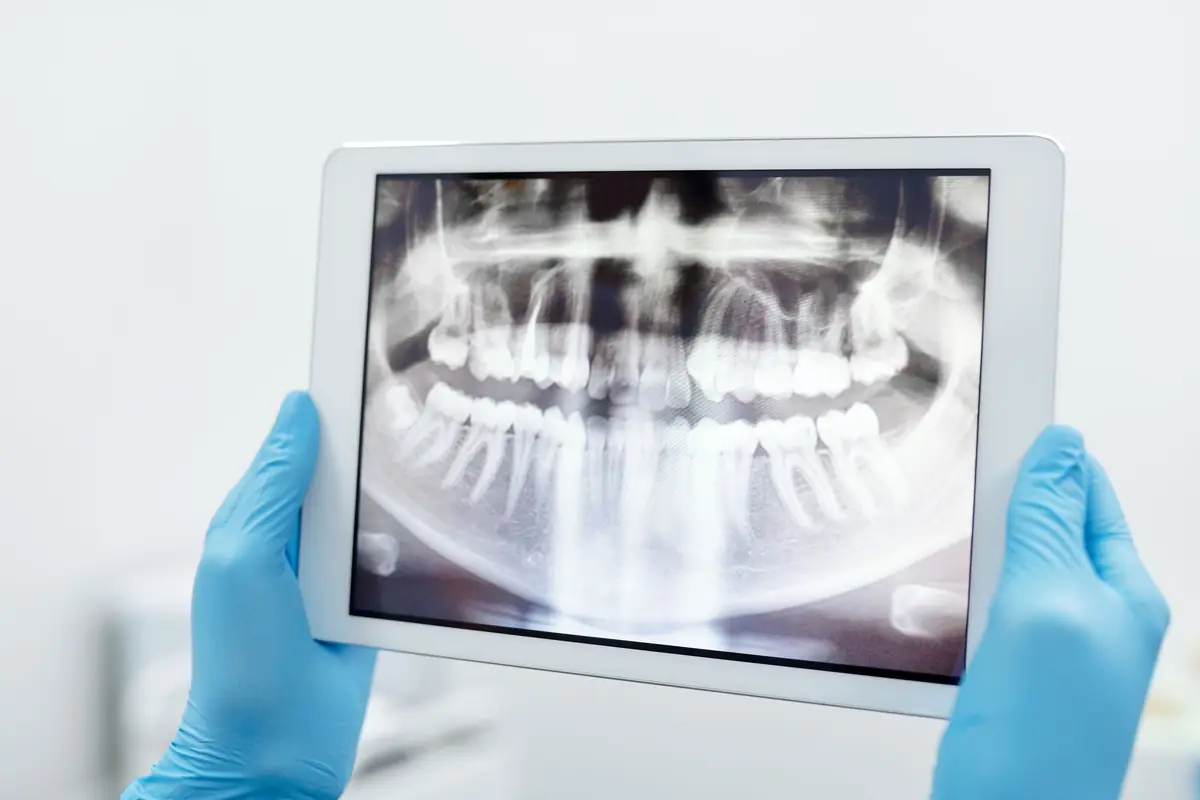
A crack in a tooth can be invisible, absent from X-rays and still painful every time you chew. This guide explains what the crack is doing, how we find it and what can be done about it.
 Clinically reviewed by Dr Ibraheem Ijaz, Principal Dentist · GDC 301711 · Last reviewed April 2026
How a tooth cracks in the first place
Enamel is the hardest thing in your body, but it is brittle. It copes well with straight-down pressure and badly with bending. A back tooth takes thousands of bites a day, and if part of it is thinner than the rest, that part flexes a fraction each time. Over months or years a hairline crack starts and slowly works its way inward.
The usual reasons a tooth is weaker than it should be:
A large old filling.
Grinding or clenching.
A root-treated tooth without a crown.
A single hard bite.
Temperature shock.
Dentists describe cracks on a spectrum. Craze lines are shallow marks in the enamel that most adults have and that need no treatment. A fractured cusp is a corner that has broken or is about to. A cracked tooth is a crack running from the biting surface down towards the root. A split tooth has gone all the way and the two halves move separately. A vertical root fracture starts at the root and works upward. Where you sit on that spectrum decides the treatment.
Signs that point to a crack rather than decay
Cracked teeth have a pattern that is different from a cavity or an abscess, and recognising it helps us find the right tooth quickly.
A sharp pain on biting that comes and goes.
It only happens with certain foods.
Cold sensitivity that is hard to pin down.
No obvious hole, no swelling, nothing on the X-ray.
Weeks or months of on-and-off symptoms.
If the pain changes character, so that it starts lingering after hot drinks, wakes you at night or throbs on its own, the crack has probably reached the nerve and the tooth has moved from sore to inflamed. That is covered on our page about pain when biting and the section below on treatment.
How we find a crack you cannot see on an X-ray
Finding the crack is detective work, and it is the reason we book the full £30 emergency examination rather than a quick look. The examination includes X-rays and runs through these tests in order:
Bite test.
Transillumination.
Dye.
Magnification.
Cold and tapping tests.
Removing the old filling.
Where a crack may involve the root, a CBCT scan (£150) gives a three-dimensional view that a flat X-ray cannot. We have the scanner on site, so it does not mean a referral.
Treatment depends on how deep the crack goes
There is no glue that mends a cracked tooth. The aim is to stop the two sides moving against each other. How we do that depends on where the crack ends.
A crown works because it wraps the whole tooth like a thimble, so biting pressure squeezes the crack shut instead of prising it open. Where a crown is planned we often fit a temporary crown at the emergency visit, which relieves the biting pain straight away while the permanent one is made.
Honest prognosis: a tooth cracked to the nerve that is root-treated and crowned has a reasonable chance of lasting many years, but it is not certain. Cracks that already extend below the gum line have a poorer outlook because bacteria can track down the crack and cause an abscess later. We tell you which situation you are in before you spend money on a crown. Every fee is written down and agreed before treatment starts, and 0% finance over 6 to 18 months is available through Tabeo, subject to status.
| What we find | Usual treatment | Fee (from) | Outlook |
|---|---|---|---|
| Shallow crack in enamel only, no symptoms | Smooth and monitor, sometimes a bonded filling | £30 examination; white filling £150–£220 | Excellent |
| Crack into dentine, nerve healthy | Crown to hold the tooth together; a bonded filling as a temporary hold | All-ceramic crown £750–£1,000 | Good: most teeth settle once the crown stops the flexing |
| Crack reaching the nerve, nerve inflamed or dead | Root canal treatment, then a crown | Emergency root canal stage from £200; root canal from £450; crown £750–£1,000 | Fair to good, depending on how far the crack extends below the gum |
| Split tooth or crack running down the root | Extraction | £120–£260 | Tooth cannot be saved; the gap can be restored with an implant, bridge or denture |
Safe things to do before you are seen
- 01Chew on the other side and keep to soft food. Every bite on the crack opens it a little further.
- 02Avoid very hot and very cold drinks, or use a straw to bypass the tooth.
- 03Paracetamol and ibuprofen, taken as directed on the packet, take the edge off. Ibuprofen is more useful here because it dampens the inflammation in the ligament around the root.
- 04Do not test it. Biting repeatedly to see if it still hurts is the fastest way to turn a cracked tooth into a split one.
- 05If you wear a night guard, keep wearing it.
What happens to a cracked tooth that is ignored
Cracks do not heal and they do not stay the same size. Left alone, one of three things happens. The crack reaches the nerve, the nerve becomes inflamed and then dies, and you end up with an abscess and a root canal or extraction that could have been a crown. Or the tooth splits outright, usually while eating, and the loose half has to be removed. Or the crack runs down the root, at which point the tooth is lost whatever we do.
Treated early, the same tooth costs less, hurts less and lasts longer. That is the whole argument for having it looked at while it is still only sore on biting.
Questions, answered
Common questions
Can a cracked tooth heal on its own?
No. Enamel and dentine have no blood supply and cannot knit back together. Very shallow craze lines are harmless and can be left, but a crack that causes pain will only get longer.
Why does my cracked tooth not show on the X-ray?
An X-ray only shows a crack if the beam passes exactly along the line of it, which is rare. Most cracks are found with a bite test, a bright light and magnification rather than on film.
Is a cracked tooth a dental emergency?
It is urgent rather than life-threatening. Sharp pain on biting, pain lingering after hot drinks or a piece of tooth that feels loose all justify a same-day visit, because early treatment usually means a crown instead of a root canal or extraction.
Does a cracked tooth always need a crown?
Not always. A shallow crack with a healthy nerve can sometimes be held with a bonded filling. A crack into dentine on a back tooth usually does need a crown, because nothing else stops the tooth flexing.
How much does it cost to fix a cracked tooth?
The examination with X-rays is £30. A white filling is £150–£220, an all-ceramic crown £750–£1,000, root canal treatment from £450 and extraction £120–£260. You get a written price before anything starts.
Can a cracked tooth cause an abscess?
Yes. Bacteria travel along the crack into the nerve space, the nerve dies and infection collects at the root tip. That is why a crack that has started to throb or ache on its own needs seeing quickly.
Will the tooth need to come out?
Only if it has split in two or the crack runs down the root. Most cracked teeth we see can be saved with a crown, with or without root canal treatment, provided they are treated before the crack spreads.
In pain? Don’t wait
Same-day emergency appointments, seven days a week.
£30 emergency examination including X-rays. Call now and a real person answers, or grab a slot online.
334 Manchester Road, Deepcar, Sheffield S36 2RH · Free parking