Patient case · Composite veneers
Rebuilding Worn and Chipped Front Teeth with Composite Veneers: June’s Case
June is 60 and a keen runner. Her front teeth were chipped and stained, and two old veneers were failing. She wanted a natural, brighter smile without anything too invasive. This is how it was done, in one appointment.
Before and after

- 8 teethUpper front teeth
- CompositeBuilt up by hand, chairside
- About 4 hoursOne appointment
- 6 of 8Teeth left unprepared
What June wanted to change
June notices smiles. “For some people it’s the eyes, for me it’s the teeth,” she told us. Her own front teeth were chipped and stained, her canines had become pointed, and the two veneers on her front teeth were 20 to 30 years old and starting to fail. She had been thinking about it for a couple of years.
“I just want them to look healthy, but to look nice and white, and just when I smile for people to think, oh, she’s got nice teeth.”
June
She describes herself as a nervous patient. Her husband had had his teeth done abroad, but June wanted hers done locally, somewhere she could come back to if anything needed attention.
What we considered
June’s teeth were already well aligned, so orthodontic treatment wasn’t needed. That left two ways to change their shape and colour: porcelain veneers or composite. Porcelain veneers usually involve removing a thin layer of enamel from each tooth. Composite could be bonded straight onto the six teeth that had never been treated, leaving them as they were underneath. June had said she didn’t want anything too invasive, so composite was the better fit. Only the two front teeth, which already had old veneers, needed those removed first.
Not sure whether bonding or veneers suit your teeth? A consultation will tell you.
The plan
Remove the two old veneers, then build eight custom composite veneers across the upper front teeth, chairside, in one visit. The shape was planned at consultation around June’s face and lip line, with softer, more curved edges. The shade was chosen on the day: three trial shades went on her teeth, and she picked with us in the mirror.
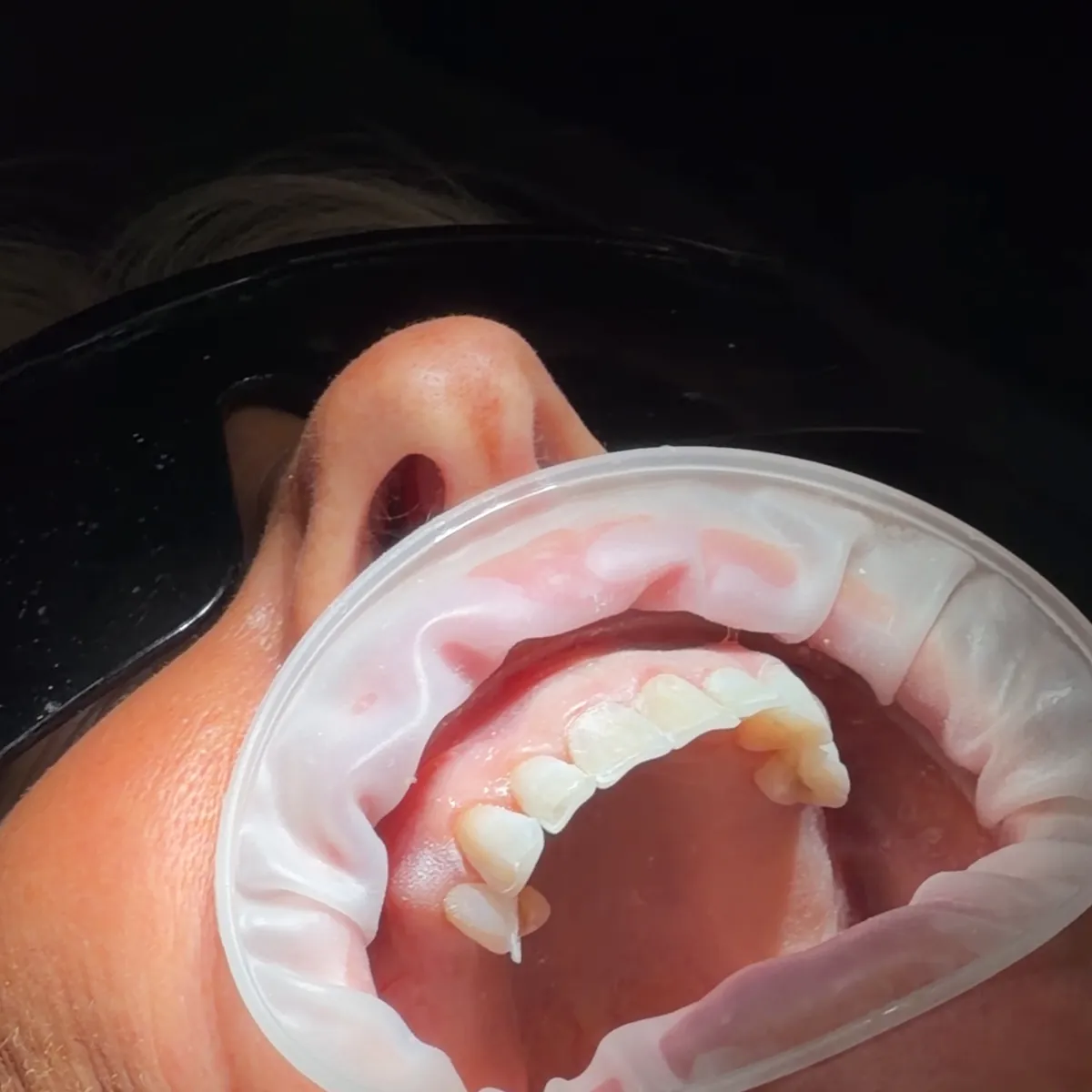
Treatment stages
- Step 1A soft retractor holds the lips back and keeps the teeth dry.
- Step 2The two old veneers come off the front teeth.
- Step 3Each tooth is bonded and built up in layers of composite, shaped by hand and set with a curing light.
- Step 4The edges are evened out, the gaps between the teeth refined, and every surface polished.
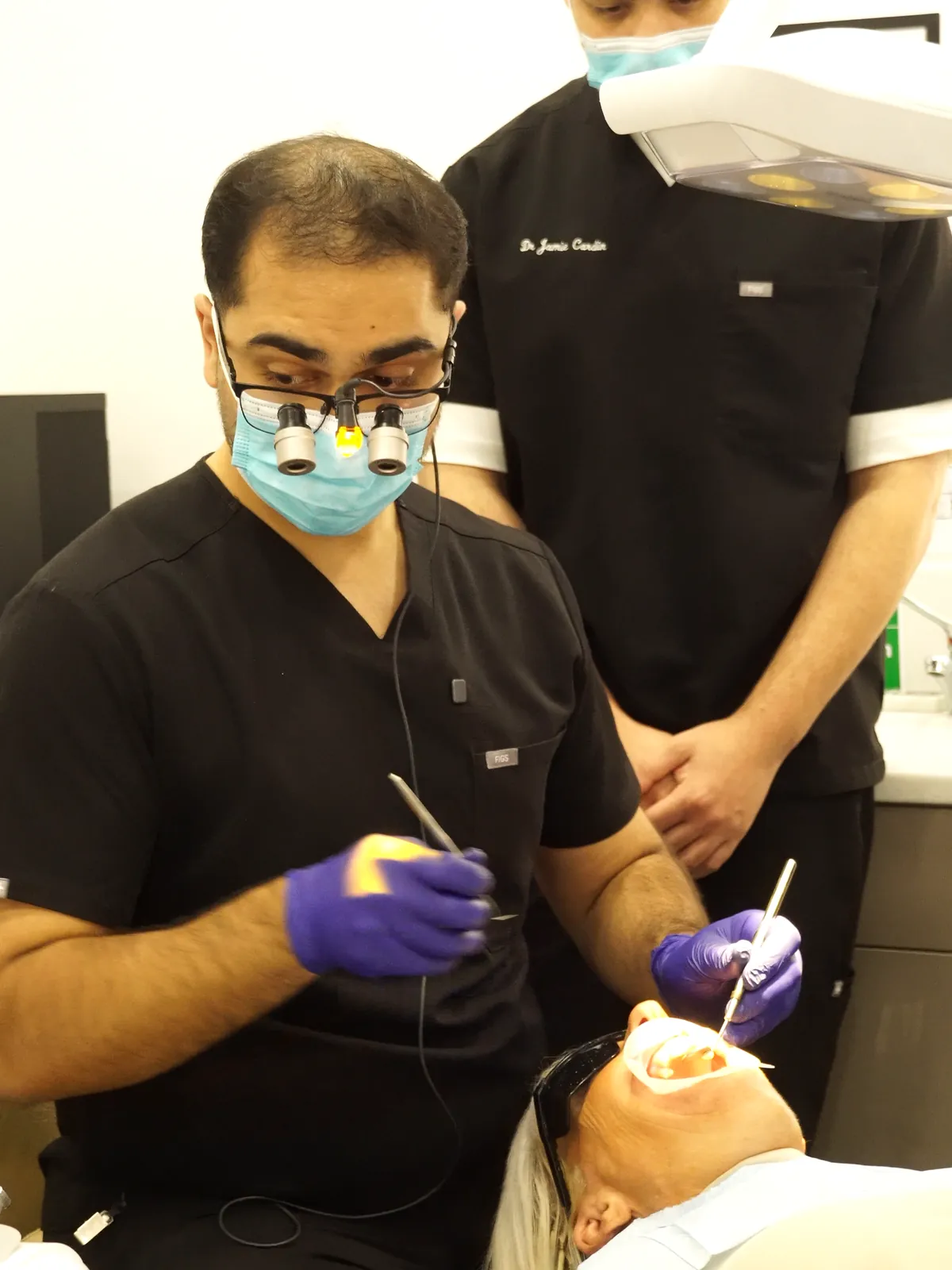
Timeframe
About four hours in the chair, in one appointment, after her consultation visits. “I thought the four hours that I was in the chair just flew by,” June said afterwards. “The surroundings are very calming.” The team checked in with her and offered breaks throughout.
Not sure whether bonding or veneers suit your teeth? A consultation will tell you.
Outcome
The edges are level, the colour is brighter and even, and the canines are no longer pointed. June’s first reaction in the mirror was “Oh, they’re gorgeous.”
“Well, I didn’t believe it was me. I looked and I thought, wow, those teeth look amazing. Really beautiful.”
June
Her advice to anyone considering it was measured: “Go for it if that’s the right thing for you, but come and talk to the people here and they will advise you. It might not be the right thing for everybody.”
Looking after it
Composite can pick up stains over time, so June’s veneers will be polished at her hygiene visits to keep them looking their best. As with any bonding, there is a small risk of a chip or crack, which can usually be repaired at the practice. Regular check-ups let us spot anything early.
Questions, answered
Frequently asked questions
How long did June’s treatment take?
About four hours in the chair, in a single appointment, with breaks offered along the way. Before that she had consultation appointments to plan the shape and shade.
Were June’s natural teeth drilled down?
Six of the eight teeth were not prepared at all: composite was bonded straight onto them. The two front teeth already had old veneers from 20 to 30 years ago, and those were removed before the new composite was placed.
How do you choose the shade?
We placed three small trial shades on June’s teeth, from a darker natural white to the brightest white, and she chose with us in the mirror. Shape is planned around the face and lip line, so the result suits the person rather than looking uniform.
How long does composite last, and how do you look after it?
Composite can pick up stains over time, so it is polished at hygiene visits to keep its shine. There is a small risk of chips or cracks, which can usually be repaired. Prices for bonding are on our fees page.
Ready when you are
Thinking about your smile?
Book a consultation. We’ll look at your teeth, show you the options, including the ones we don’t think you need, and plan a result that looks like you.